Bahawalpur (BWP) – Detailed Notes
Introduction
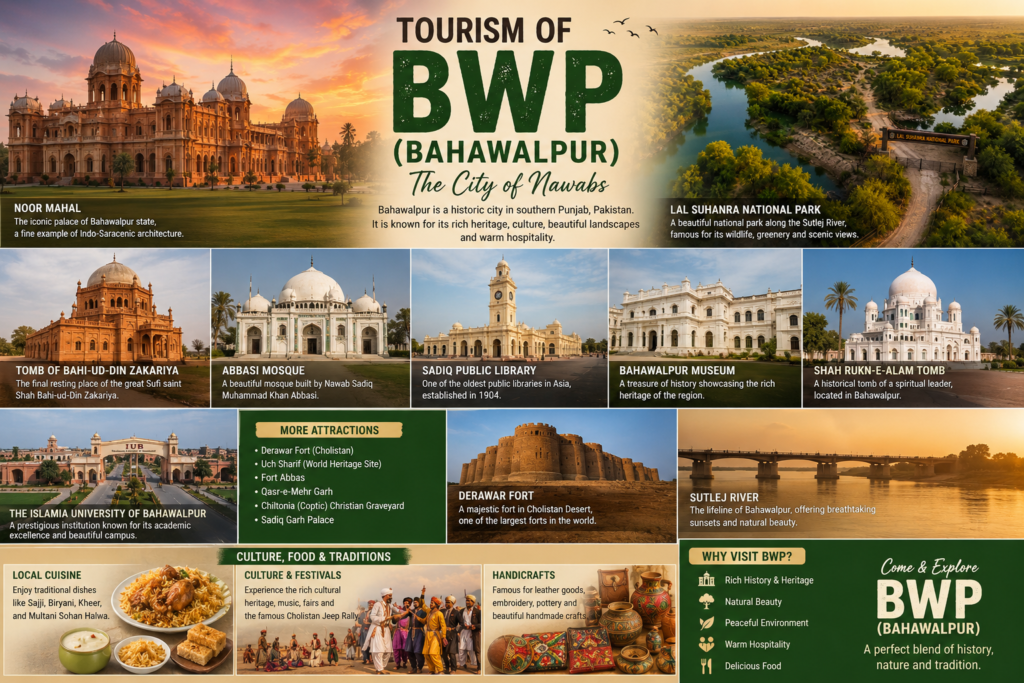
Bahawalpur (BWP) is a historic and culturally rich city located in the Punjab Province of Pakistan. It is the capital of Bahawalpur District and was once the capital of the former Princely State of Bahawalpur. The city is famous for its palaces, deserts, historical buildings, and unique culture.
Basic Information
| Feature | Details |
|---|---|
| City Name | Bahawalpur |
| Province | Punjab |
| Country | Pakistan |
| Founded | 1748 |
| Founder | Nawab Bahawal Khan I |
| Language | Saraiki, Urdu, Punjabi |
| Famous For | Noor Mahal, Derawar Fort, Cholistan Desert |
History of Bahawalpur
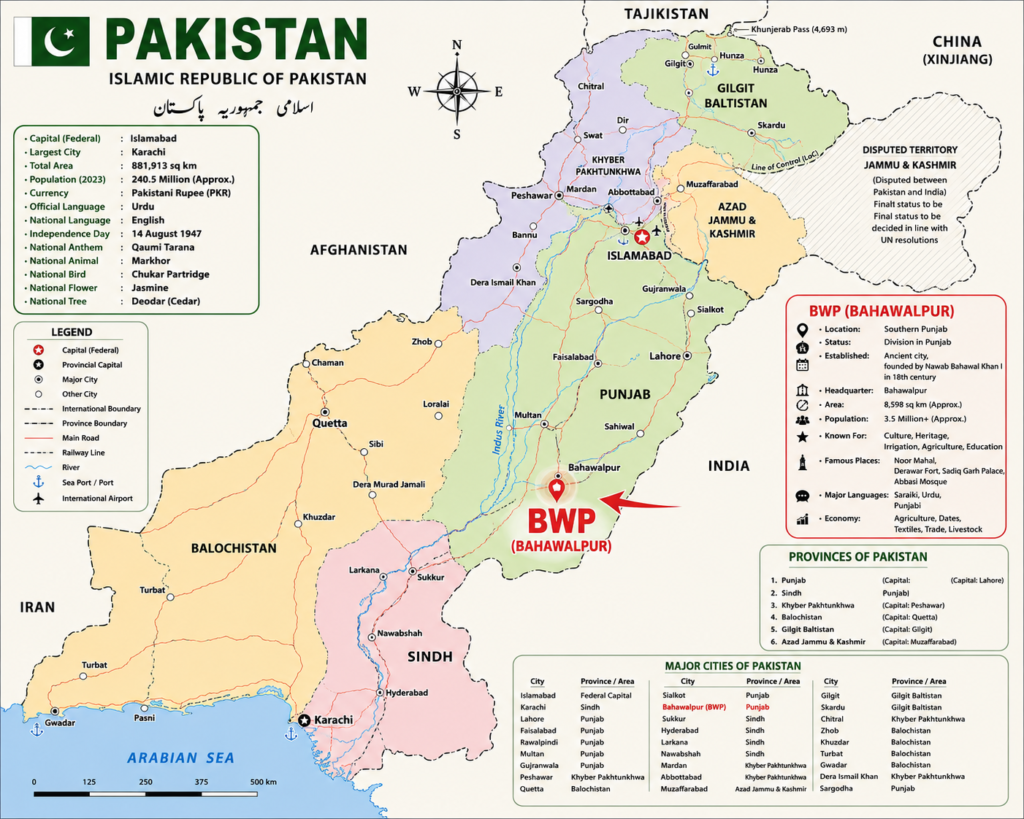
Bahawalpur was founded in 1748 by Nawab Bahawal Khan I, from whom the city gets its name.
The city became the capital of the Bahawalpur State, one of the largest princely states in the Indian subcontinent. During British rule, Bahawalpur remained an autonomous princely state under British protection.
After the partition of India in 1947, Bahawalpur joined Pakistan and officially became part of Pakistan in 1955.
Geography
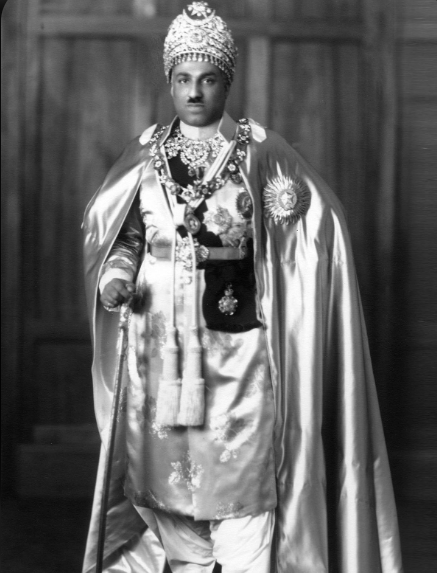
Bahawalpur is located in southern Punjab.
Boundaries
- North: Multan and Lodhran
- East: India (Rajasthan)
- South: Cholistan Desert
- West: Rahim Yar Khan
Climate
Bahawalpur has a hot desert climate:
- Extremely hot summers
- Mild winters
- Low rainfall
Summer temperatures can exceed 45°C.
Cholistan Desert
One of the most famous features of Bahawalpur is the Cholistan Desert.
Features:
- Covers about 26,000 square kilometers
- Known locally as “Rohi”
- Home to nomadic tribes
- Famous for camel breeding
- Hosts the annual Cholistan Jeep Rally
The desert attracts tourists from all over Pakistan.
Historical Places
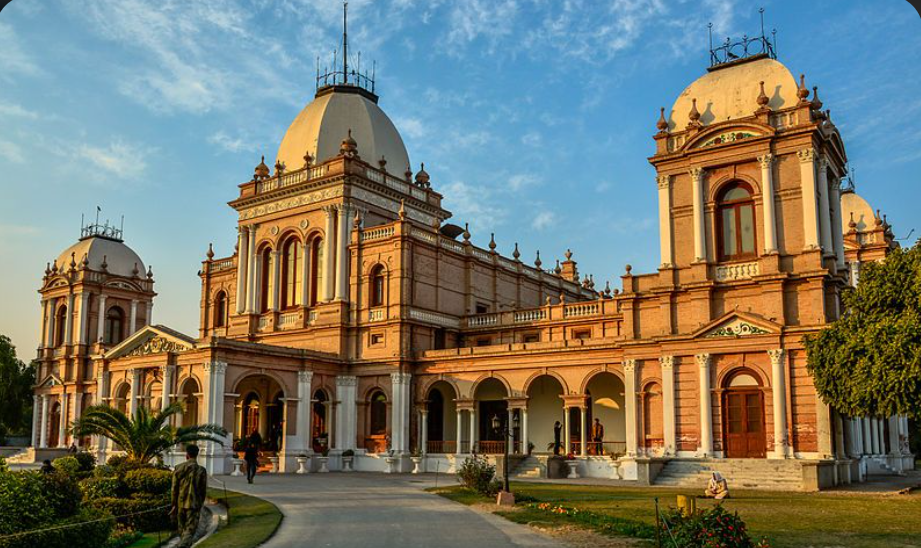
1. Noor Mahal
- Built in 1875
- Royal palace of the Nawabs
- Beautiful architecture
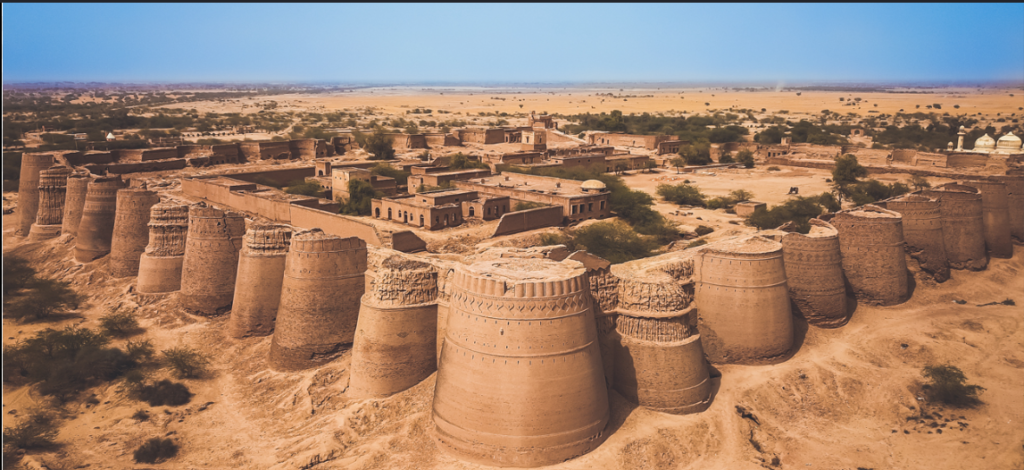
2. Derawar Fort
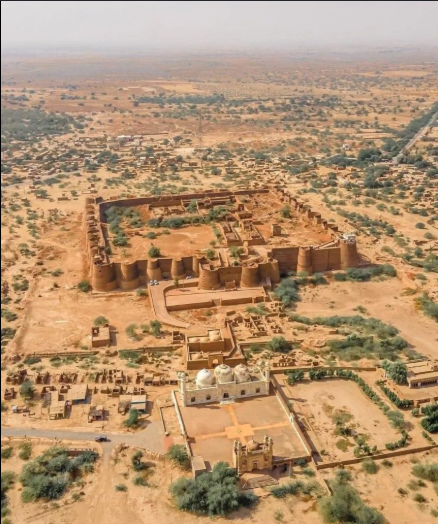
- Massive square-shaped fort
- Located in Cholistan Desert
- One of Pakistan’s most famous forts
- Features 40 large bastions
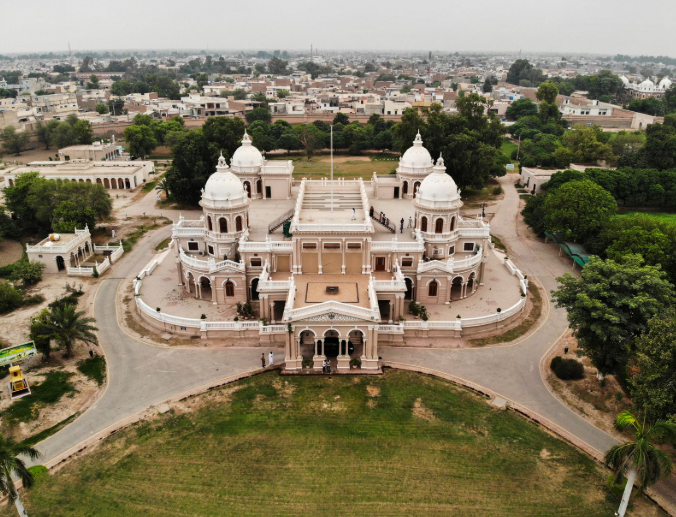
3. Gulzar Mahal
- Historic royal palace
- Built by the Nawabs of Bahawalpur
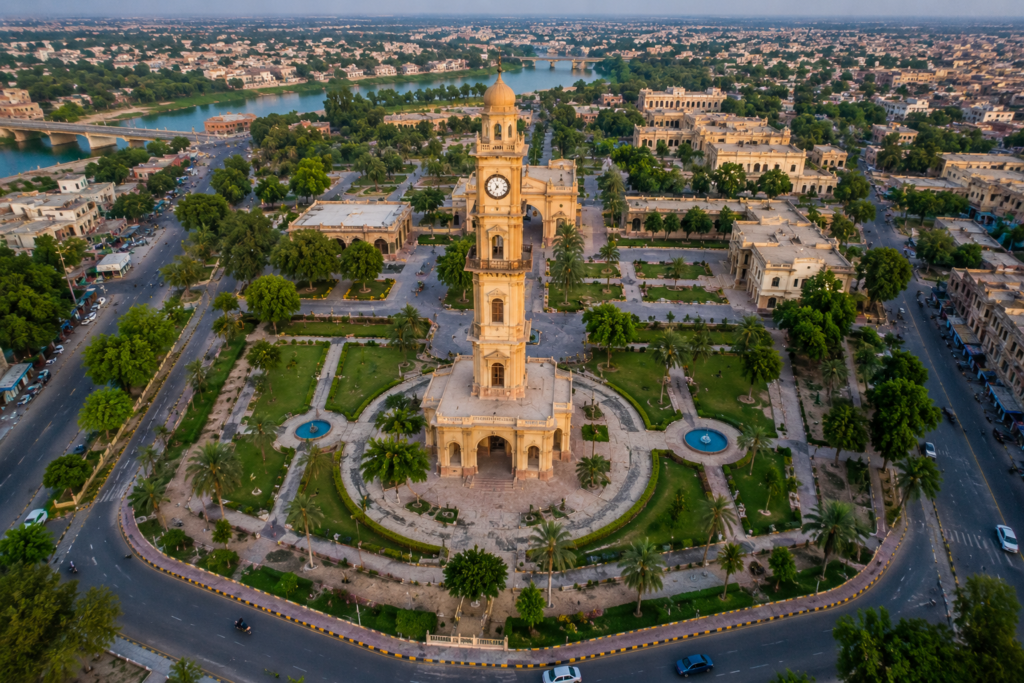
4. Sadiq Garh Palace
- One of the largest palaces in Pakistan
- Symbol of royal heritage
Education
Bahawalpur is an important educational center.
Major Institutions
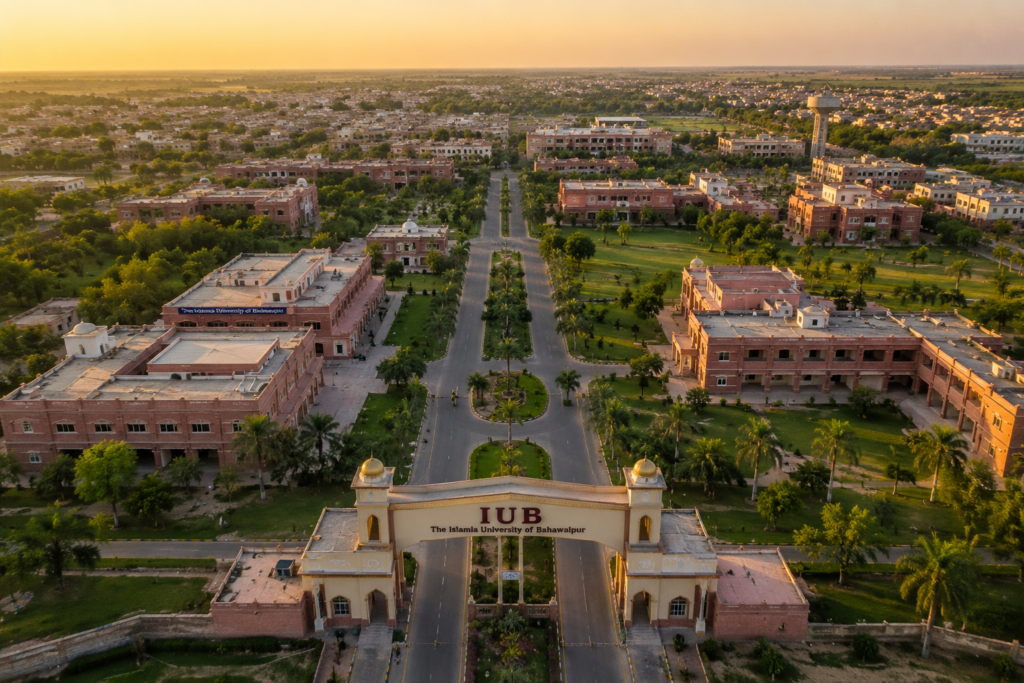
- The Islamia University of Bahawalpur (IUB)
- Quaid-e-Azam Medical College
- Government Sadiq College Women University
Thousands of students from different regions study in Bahawalpur.
Economy
The economy of Bahawalpur is based on:
Agriculture
Major crops include:
- Cotton
- Wheat
- Sugarcane
- Mangoes
- Dates
Trade and Industry
- Textile industry
- Agricultural products
- Handicrafts
Culture
Bahawalpur has a rich cultural heritage.
Traditional Dress
- Shalwar Kameez
- Ajrak and traditional turbans
Traditional Foods
- Sajji
- Kabab
- Saag
- Traditional sweets
Languages
- Saraiki (most widely spoken)
- Urdu
- Punjabi
Tourism
Popular tourist attractions include:
- Noor Mahal
- Derawar Fort
- Cholistan Desert
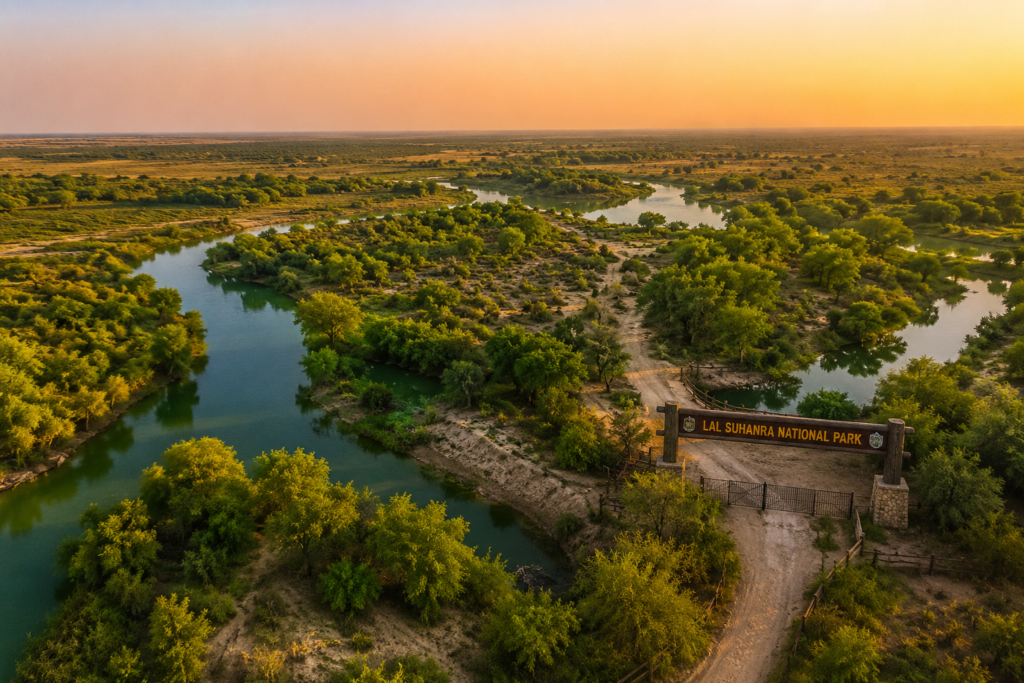
- Lal Suhanra National Park
- Gulzar Mahal
Tourism contributes significantly to the local economy.
Lal Suhanra National Park
Lal Suhanra National Park is one of Pakistan’s largest national parks.
Features:
- Wildlife sanctuary
- Desert, forest, and wetland ecosystems
- Deer, birds, and other wildlife
- Popular picnic and educational destination
Importance of Bahawalpur
Bahawalpur is important because:
- It has a rich historical background.
- It preserves the heritage of the Nawabs.
- It is an educational hub.
- It is an agricultural center.
- It attracts tourists from across Pakistan.
Conclusion
Bahawalpur is one of Pakistan’s most historic and beautiful cities. Known for its royal palaces, magnificent forts, Cholistan Desert, educational institutions, and rich culture, it holds a special place in the history and development of Pakistan. The city continues to grow while preserving its unique heritage and traditions.